
Most bathroom tile cleaners work great for about a week. Then the grout starts looking dark again, there’s a faint chemical smell in the air, and you’re back to spraying and scrubbing. It’s a loop a lot of homeowners know well.
The problem isn’t the effort. It’s the tool. Chemical sprays are designed to break down surface grime, but grout is porous. It traps bacteria, mold spores, and soap residue deep inside in spots that no spray can fully reach. Steam cleaning works differently, and once you understand why, it’s hard to go back.
Here’s a straightforward look at both methods: what each one actually does, where each one falls short, and why professional cleaning crews have largely moved to steam for tile and grout work.
How Chemical Sprays Work And Where They Stop
Most tile and grout sprays use a combination of surfactants, bleach, or acid-based compounds to dissolve mineral deposits, soap scum, and biological buildup. They’re effective on the surface of glazed tile – the smooth, non-porous part – and they can lighten grout visually by bleaching stains.
The limitations show up quickly:
- Grout is porous, so sprays sit on top rather than penetrating the material. The residue that’s left behind actually attracts more dirt.
- Bleach-based products can wear down grout sealer over time, making lines more absorbent and harder to clean with each application.
- Mold and mildew roots sit below the surface. Bleach kills what it touches on top but doesn’t reach the root structure. The mold comes back, often faster than before.
- Chemical residue builds up with repeated use. In bathrooms and kitchens, that residue mixes with steam from showers or cooking and becomes part of the air in the room.
None of this means sprays are useless. For a quick wipe-down between deep cleaning, they do the job. But for grout lines, corners, or any area with persistent buildup, they’re dealing with the surface of a deeper problem.
How Steam Cleaning Works on Tile and Grout
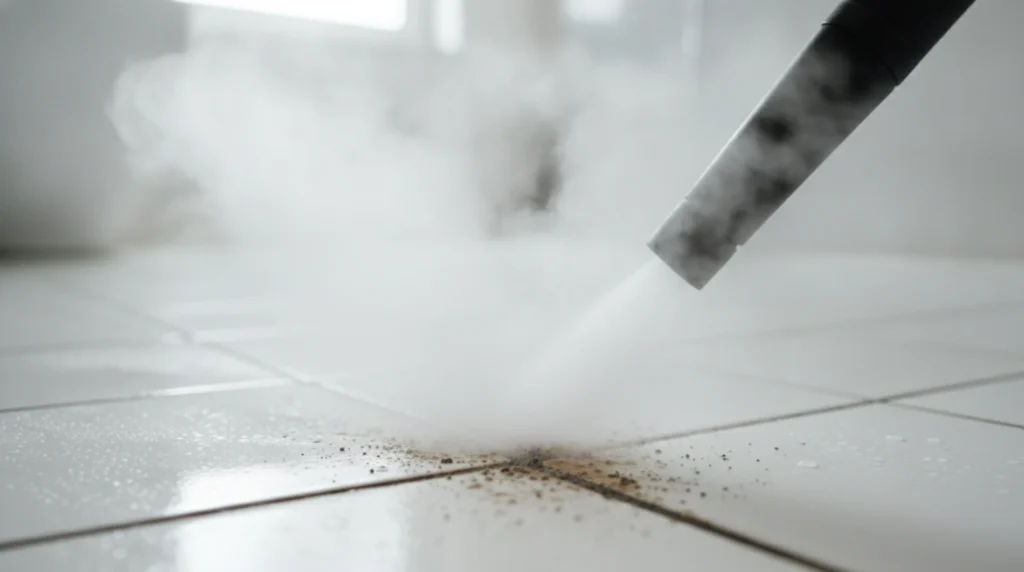
A steam cleaner heats water to 212°F or higher and releases it under pressure. That combination does something chemical sprays can’t: it penetrates the porous structure of grout, dislodges embedded grime, and kills bacteria, mold spores, and dust mites on contact without leaving anything behind.
The high-temperature steam reaches into the micro-crevices in grout lines. When it hits bacteria or mold at that temperature, it destroys the cell walls. No residue. No chemical film. When the steam evaporates, the surface is clean – not just visually clean, but hygienically clean.
For tile specifically, steam works well on the following:
- Ceramic and porcelain tiles in bathrooms and kitchens
- Grout lines, including textured or unsanded grout
- Shower enclosures and around tub surrounds
- Kitchen backsplashes with grease buildup
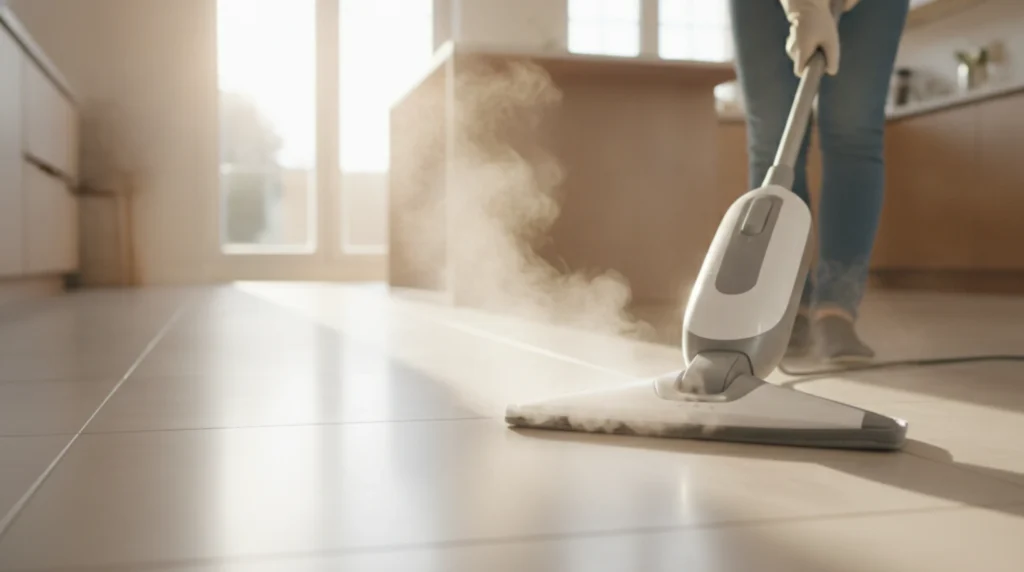
- Tile floors in entryways, laundry rooms, and mudrooms
One thing worth noting: steam cleaners aren’t the right tool for every tile type. Unsealed natural stone like marble or travertine can absorb moisture. Older grout that hasn’t been sealed in years may need resealing after a steam clean. A professional cleaner can identify which surfaces need extra care before starting.
A Side-by-Side Look
Penetrates grout lines: Chemical sprays – no. Steam – yes.
Kills mold at the root: Chemical sprays – surface only. Steam – yes.
Leaves chemical residue: Chemical sprays – yes. Steam – none.
Safe for sealed grout long-term: Chemical sprays degrade sealer over time. Steam – yes.
Odor after cleaning: Chemical sprays – chemical / fragrance smell. Steam – none.
Effective on textured grout: Chemical sprays – limited. Steam – yes, with the right brush head.
Safe for homes with kids, pets, or allergies: Chemical sprays – depends on the product. Steam – yes.
What Professional Cleaners Actually Use
Most professional cleaning crews, including ours, carry both. The approach depends on the job.
For routine maintenance cleaning, targeted sprays on tile surfaces still make sense. A good multi-surface cleaner handles light buildup quickly, and when combined with a microfiber cloth rather than a reusable rag, it keeps cross-contamination between surfaces from being an issue.
For deep cleans like move-out cleanings, post-construction, or homes that haven’t had a professional clean in months, the steam cleaner comes out. Grout lines that look permanently dark often aren’t. They’re just packed with buildup that sprays have been sealing in rather than lifting out. After a thorough steam clean, the difference in grout color can be dramatic.
We also pair steam with specialized brushes for grout lines and hard-to-reach corners. This kind of detailed work produces results that are worth photographing, and we use these photographs to document every job.
The no-chemical-smell result isn’t incidental. It’s the point. When a home smells clean rather than like a cleaning product, that’s the sign that the work actually got done.
A Few Common Questions
Is steam cleaning safe for all tile?
Sealed ceramic and porcelain – yes, no problem. Unsealed natural stone is the exception. Marble, travertine, and limestone are sensitive to moisture and temperature changes. If you’re not sure what type of tile you have, ask before booking a deep clean.
How long does steam-cleaned grout stay clean?
Longer than with spray cleaners, but grout will always accumulate buildup over time, especially in high-moisture areas. Many homeowners find that quarterly deep cleans keep grout looking consistently good between routine maintenance visits.
Do I need to seal grout after steam cleaning?
Not automatically, but it’s worth checking. If your grout hasn’t been sealed recently, a steam clean is a good moment to do it. You’re starting from a clean base, which means the sealer will actually bond correctly. Your cleaner can flag this if it’s relevant.
The Bottom Line
Chemical sprays handle surfaces. Steam cleans what’s inside them. For tile that’s genuinely clean, not just bleached or fragrance-masked, steam is the more effective tool, especially for grout.
If your bathroom tile looks dull or your grout has been losing its color for a while, the issue probably isn’t the cleaning frequency. It’s the method. A professional deep clean with the right equipment often restores tile and grout to a condition that routine spray-and-wipe can’t reach on its own.