
If you’ve spent any time on cleaning TikTok or YouTube in the past few years, you’ve seen The Pink Stuff. Someone smears a little of that pale pink paste onto a filthy oven door, gives it thirty seconds, wipes it off, and the glass looks new. The comments fill up immediately. People are genuinely surprised.
Professional cleaners aren’t surprised. Most of us had it in our kits before it went viral.
The product has been around since the 1930s. It was originally manufactured in the UK and used primarily in commercial and industrial settings. The formula hasn’t changed much. What changed is that social media figured out it works, and now everyone wants to know what it actually does and where it’s worth using.
Here’s the honest version, from the perspective of people who use it on multiple homes every week.
What The Pink Stuff Actually Is
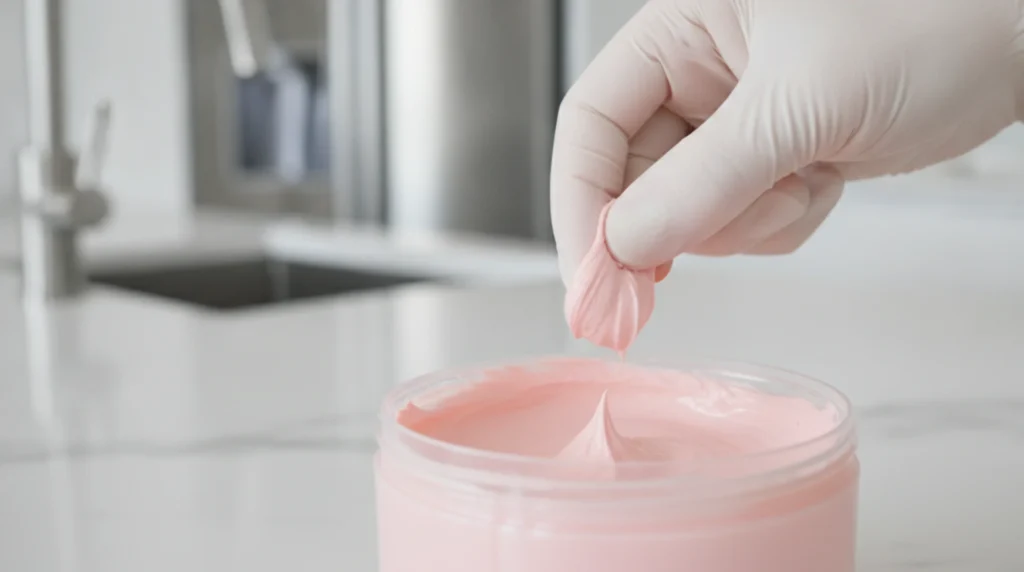
The Pink Stuff is a mildly abrasive cleaning paste. The active cleaning work comes from a combination of fine calcium carbonate particles, which provide the gentle abrasive action, and surfactants that break down grease and soap residue. The paste consistency means it stays where you put it and doesn’t run off vertical surfaces while it works.
What makes it different from a standard scouring powder is the texture. The abrasive particles are fine enough that they clean without scratching most hard surfaces, including glass, stainless steel, ceramic, and chrome. A product like Bar Keepers Friend or a standard scrubbing powder uses coarser particles and is better for heavier jobs but will scratch softer surfaces or leave micro-abrasions on things like oven door glass over time.
The Pink Stuff sits in between: it has enough abrasive action to handle burnt-on grime, mineral deposits, and soap scum, but it’s gentle enough to use on surfaces that can’t take anything harsher. That combination is why it earns a place in a professional kit, where you’re moving through different rooms and different surface types in the same visit.
Where It Genuinely Works
Some products have one strong use case and a long list of things they technically can do but don’t do especially well. The Pink Stuff is more versatile than most, and the following surfaces are where we consistently reach for it.
Oven door glass
This is probably the use case that went viral for good reason. Oven door glass accumulates carbonized grease over time, a hard, baked-on layer that spray cleaners can’t touch and that chemical oven cleaners shouldn’t be used on directly. The Pink Stuff cuts through it with a damp cloth and moderate pressure. For heavily carbonized glass we still use a razor scraper first, but The Pink Stuff handles the residue and brings the glass to a clear finish. It doesn’t scratch the glass.
Stovetops, including ceramic and glass induction
Ceramic and glass stovetops scratch easily and stain from burnt-on food in ways that look permanent. The Pink Stuff removes the discoloration and burnt residue without scratching the surface, which most other abrasive options will do. For smooth-top ranges, this is one of the few products we trust to clean heavily soiled areas without creating the haze and micro-scratches that build up with harsher cleaners.
Sinks, particularly stainless steel and porcelain
Stainless steel sinks develop a dull, grey film from water minerals, soap buildup, and oxidation. The Pink Stuff removes that film and leaves the surface noticeably brighter. On porcelain sinks with rust stains or grey marks from metal cookware, it handles the discoloration that spray cleaners leave behind. The paste consistency is also practical for sinks because you can apply it to the basin walls and let it sit briefly before wiping.
Tile grout and ceramic surfaces
Grout discoloration from soap scum and mineral deposits responds well to The Pink Stuff, especially in combination with a stiff grout brush. It’s not a replacement for steam cleaning on deeply stained or porous grout, but for surface-level discoloration and soap buildup on ceramic tile and the tile surround around a tub or sink, it’s faster and more controlled than spray-and-wipe methods.
Chrome fixtures and faucets
Hard water deposits on chrome are one of the more stubborn bathroom problems. The Pink Stuff removes the chalky white buildup without scratching the chrome finish. It works on faucet handles, showerheads, and towel bars. For heavy scale, a descaling spray may need to go on first, but The Pink Stuff handles the residue and polishes the surface clean.
Pots, pans, and baking dishes
The exterior of stainless steel pots, the bottom of pans, and ceramic or glass baking dishes accumulate burnt-on staining that dishwashers don’t touch. The Pink Stuff handles these surfaces well. One important note: it isn’t recommended for use on non-stick coatings, seasoned cast iron, or anything with a surface that depends on an intact layer that shouldn’t be abraded.
What It Can’t Do
The viral videos tend to show The Pink Stuff at its best, on surfaces where it produces dramatic results with minimal effort. That’s accurate, but it’s worth being clear about the limits.
- It doesn’t disinfect. The Pink Stuff is a cleaner and mild abrasive, not a disinfectant. In bathrooms and kitchens where sanitization matters, it removes the buildup, and a separate disinfectant handles the biological contamination. Using it as a standalone bathroom cleaner without a disinfectant step leaves surfaces looking clean but not hygienically clean.
- It isn’t a degreaser. For heavy grease, like the inside of a range hood or the walls around a stovetop that hasn’t been wiped down in months, a dedicated degreaser needs to go first. The Pink Stuff cleans up the residue after the degreaser has done its work, but it doesn’t have the chemistry to break down concentrated cooking grease on its own.
- It shouldn’t go on soft or porous surfaces. Natural stone like marble, travertine, or unsealed limestone is too soft and porous for an abrasive paste. Even fine abrasives can dull a polished stone surface. Painted walls are the same: the paste will take the paint off along with whatever you’re trying to clean.
- Non-stick and coated surfaces need caution. Any non-stick coating, whether on cookware or a coated appliance surface, can be abraded by The Pink Stuff over time. It’s fine for a single targeted use on a stubborn spot, but not for regular cleaning of these surfaces.
- It takes a little more time than spraying. The paste has to be applied, worked in with a damp cloth, and wiped off. On large flat surfaces, a spray-and-wipe product is faster. The Pink Stuff earns its time on surfaces where spray cleaners simply don’t produce the same result.
How We Really Use It on a Job
It isn’t a product we apply everywhere. It’s a targeted tool, and using it well means knowing when to reach for it versus when something else will do the job faster or better.
In a standard cleaning visit, The Pink Stuff typically comes out for specific problem spots: the oven door glass, a discolored sink, hard water marks on faucets, or burnt residue on a stovetop that a microfiber wipe doesn’t handle. It’s not part of the routine wipe-down. It’s the product that addresses the things a routine wipe-down leaves behind.
The application is straightforward. A small amount on a damp cloth, worked in with light to moderate pressure in a circular motion, then wiped clean with a fresh damp cloth and dried. For tougher spots, a second application beats pressing harder on the first one. On surfaces where we need to confirm it’s safe, we test on a hidden area first.
The reason it travels to every job, even when we don’t expect to need it, is that houses surprise you. A client might mention the oven glass casually on the way in. The sink in the guest bathroom might have years of hard water buildup that wasn’t in the scope discussion. Having it in the kit means being able to handle those moments without a separate product run.
For a deep clean or a move-out clean, it’s used more systematically: the oven glass, every sink, the stovetop, and any chrome fixtures with visible scale. In those situations it contributes significantly to the final result, particularly on homes where those surfaces haven’t been professionally cleaned in a while.
Why It Works When Sprays Don’t
Spray cleaners are primarily chemistry. They work by dissolving or breaking down whatever they’re applied to. That works well for grease, soap residue, and biological buildup on surfaces that don’t have hard mineral or carbonized deposits.
Hard water stains, burnt-on carbon, and mineral scale are a different category. They’ve bonded to the surface at a physical level. Chemistry alone has a limited effect on them. You need a mechanical component, actual friction between an abrasive and the deposit, to break the bond and lift the material off the surface.
The Pink Stuff provides that mechanical component while staying gentle enough not to damage most hard surfaces. That’s the gap it fills. A spray cleaner on hard water deposits does almost nothing. The Pink Stuff on the same deposits, with a cloth and thirty seconds of work, removes them cleanly.
The viral surprise makes sense once you understand this. Most people have been reaching for sprays on problems that can only be solved abrasively. When they see what a mild abrasive paste does to the same surface, it looks like magic. It isn’t magic. It’s the right category of product for the job.
The Bottom Line
The Pink Stuff earned its reputation honestly. It handles a specific category of cleaning problems, mineral deposits, carbonized residue, and surface-level discoloration on hard non-porous surfaces better than most alternatives at the price point. It doesn’t do everything, and it shouldn’t be used on everything. But for the surfaces it’s made for, it’s consistently one of the most effective tools in the kit.
If you’re buying it for home use, buy the tub, not the spray. The paste formula is what the product is known for. A small amount goes a long way, and the tub lasts considerably longer than the price suggests it will.